
North Carolina Bankruptcy Records
North Carolina bankruptcy records are filed and kept by three federal district courts that cover all 100 counties in the state. These courts handle every bankruptcy case in North Carolina, from Chapter 7 filings to Chapter 13 repayment plans. You can search bankruptcy records online through the PACER system or visit a courthouse in person. Each district court maintains its own clerk's office where staff can help you find case files, docket sheets, and discharge orders. Free phone access is also available through the VCIS line at any time of day.
North Carolina Bankruptcy Records Quick Facts
North Carolina Bankruptcy Court Districts
Three federal bankruptcy courts serve North Carolina. The Eastern District covers 44 counties in the eastern part of the state. The Middle District handles 24 counties in the central region. The Western District serves 32 counties on the western side. All bankruptcy cases in North Carolina go through one of these three courts. State courts do not handle bankruptcy filings.
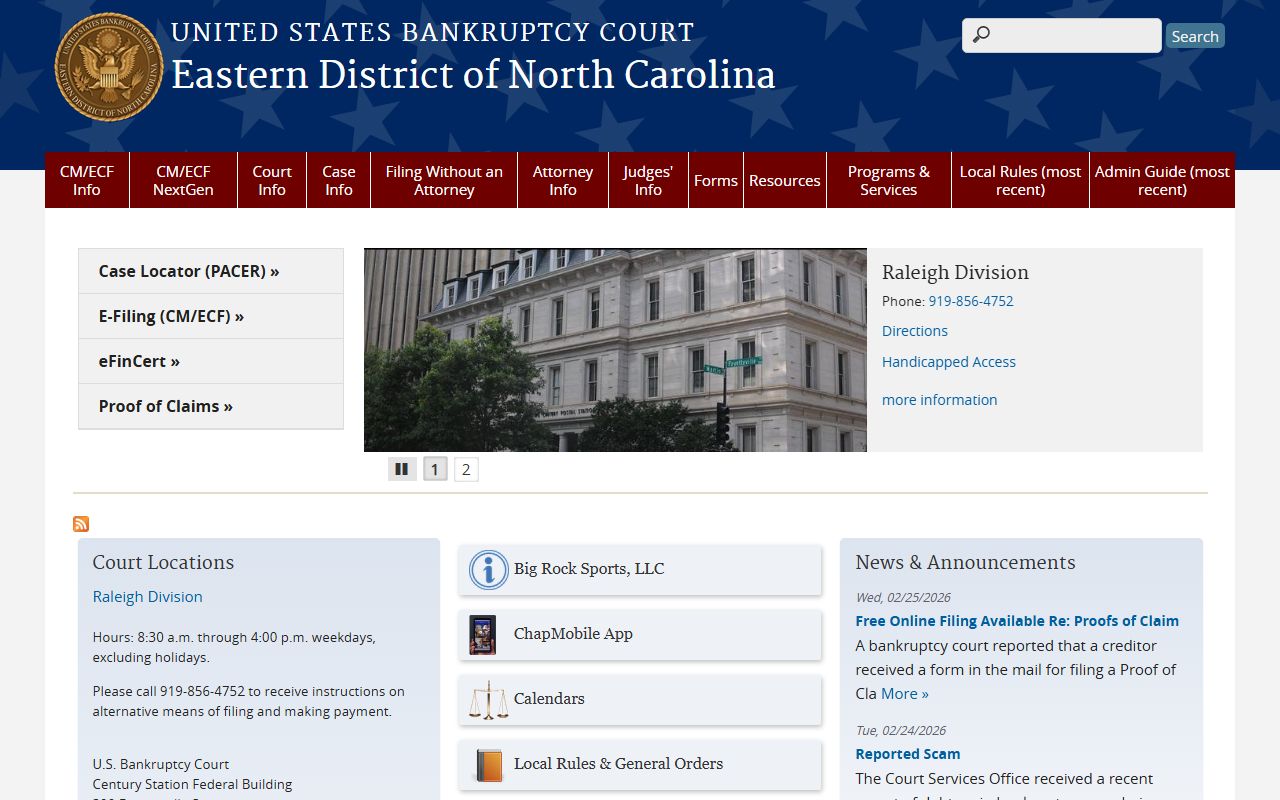
The Eastern District of North Carolina has its main office at 300 Fayetteville Street, 4th Floor, Raleigh, NC 27601. This court also runs division offices in Greenville, Wilmington, New Bern, Elizabeth City, and Wilson. The phone number for the Raleigh office is 919-856-4752. Office hours run from 8:30 a.m. to 4:00 p.m. on weekdays. The Eastern District keeps bankruptcy records for the largest number of counties in North Carolina, and each division serves a group of counties within that area.
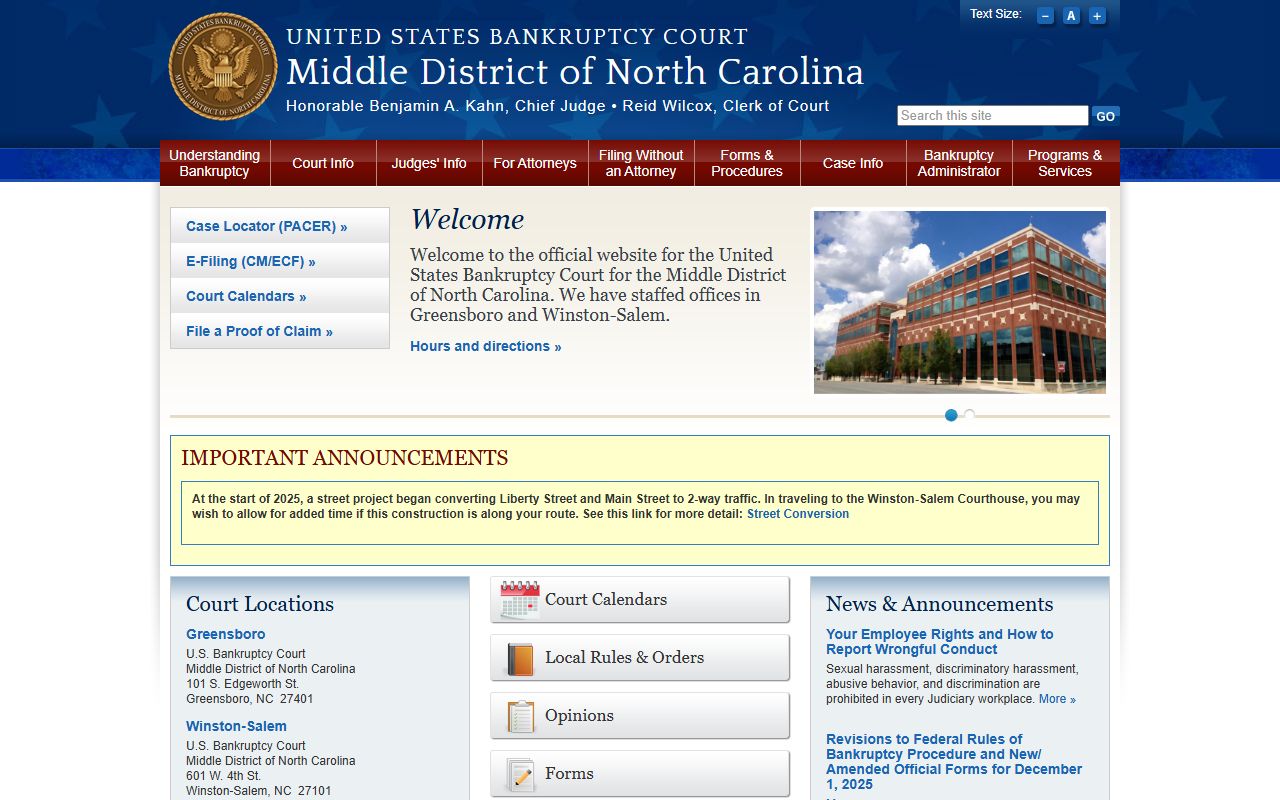
The Middle District of North Carolina operates from offices in Greensboro, Winston-Salem, and Durham. The main office sits at 101 South Edgeworth Street, Greensboro, NC 27401. Call the Greensboro office at (336) 358-4000 or the Winston-Salem office at (336) 397-7787. Counties served include Guilford, Forsyth, Durham, Davidson, Randolph, and 18 others in the central part of North Carolina.
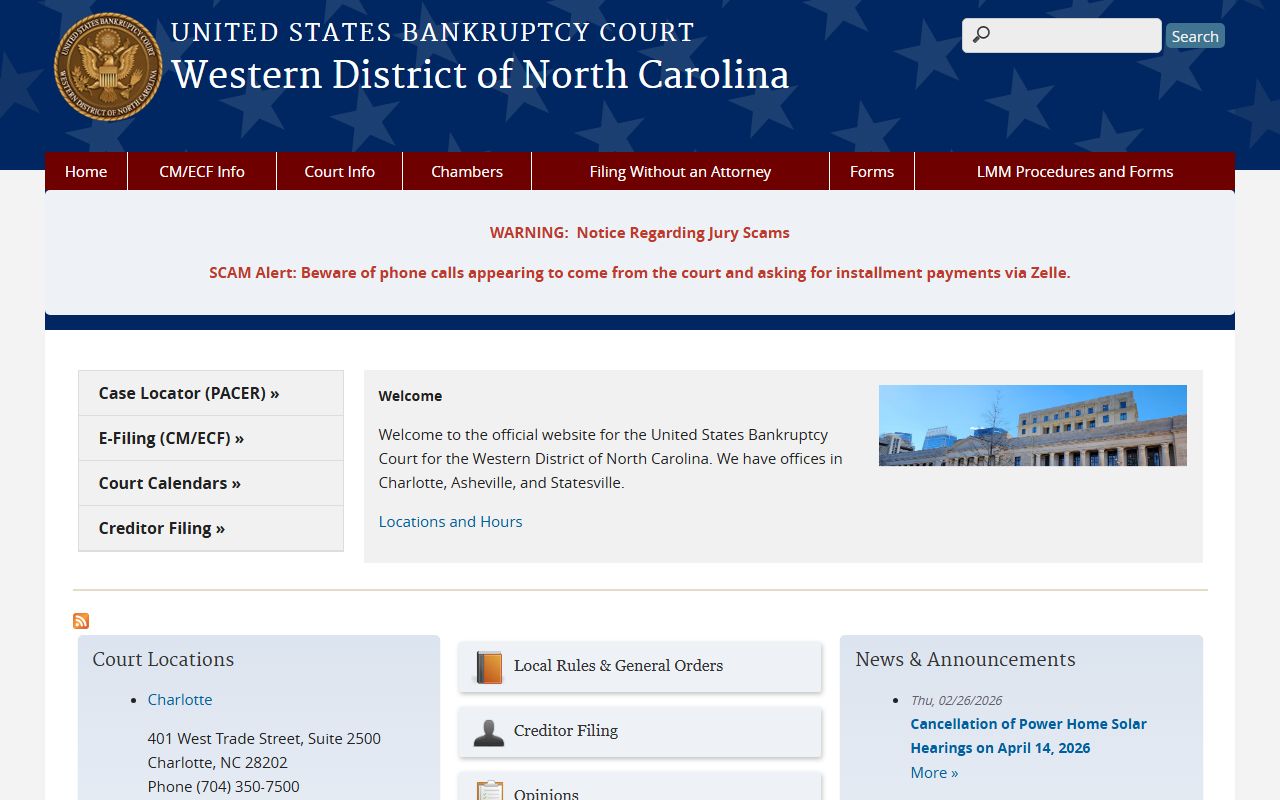
The Western District of North Carolina has offices in Charlotte, Asheville, Statesville, and Shelby. The Charlotte office is at 401 West Trade Street, Suite 2500, Charlotte, NC 28202. Call (704) 350-7500 for the main line or (828) 771-7300 for Asheville. This district covers Mecklenburg, Buncombe, Gaston, Union, and 28 other counties in western North Carolina. All mail should go to P.O. Box 34189, Charlotte, NC 28234-4189.
How to Search Bankruptcy Records Online
The fastest way to find North Carolina bankruptcy records is through PACER, the federal court system's online portal. PACER gives you access to more than 1 billion documents from all federal courts. You need a free account to start. Once you sign up, you can search any of the three North Carolina bankruptcy courts by name, case number, or Social Security number. The CM/ECF system lets you pull up docket reports and download case documents right away.
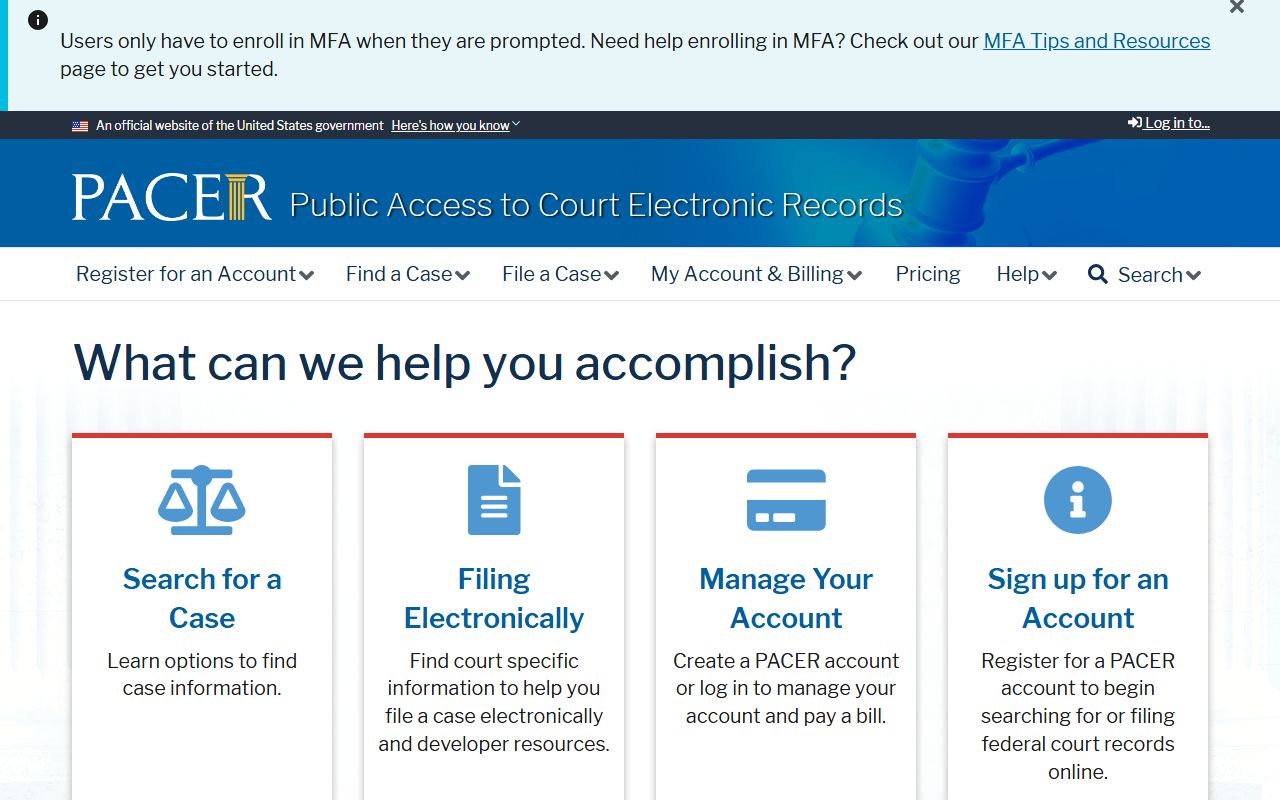
New cases show up on PACER within 24 hours of filing. The PACER Case Locator works as a national search tool, so you can check all three North Carolina districts at once. This is helpful when you do not know which district a case was filed in. For bankruptcy records filed on or after December 1, 2003, all documents are available through PACER in North Carolina. Older records may require a written request to the clerk's office, with a $30.00 search fee plus $0.50 per page for copies.
Each courthouse in North Carolina also has free public access terminals in the lobby. These let you search the court's records at no cost. You can look up cases by party name or case number. The terminals give you the same data as PACER but without the per-page fee. This is a good option if you live near a court office in North Carolina.
Note: PACER accounts are free to create, and fees are waived when your usage stays under $30 per quarter.
What North Carolina Bankruptcy Records Contain
Bankruptcy case files in North Carolina hold a wide range of documents. Each file tells the full story of a case from the first filing through the final order. The records are detailed and cover both the debtor's finances and every action the court takes. The North Carolina State Records guide lists the full set of documents you can expect to find in a typical case.
A bankruptcy record in North Carolina typically includes the debtor's name and filing status, the chapter of bankruptcy filed, a list of all creditors, and key dates such as the filing date, meeting of creditors, hearing date, and discharge date. You will also find the name of the assigned judge, the trustee's contact details, and the attorney's information. Financial documents in the file include schedules of assets and liabilities plus a full statement of financial affairs.
Case files also hold proof of claim forms from creditors, motions, complaints, court orders, and the final judgment or case disposition. Some files contain transcripts of proceedings and sound recordings from hearings. Every action taken in a North Carolina bankruptcy case gets recorded on the docket sheet, which serves as the master index for the entire file.
Bankruptcy Filing Types in North Carolina
Most bankruptcy cases in North Carolina fall under one of three chapters. Each type creates a different set of records. The U.S. Courts bankruptcy page explains each chapter in detail. In 2020, North Carolina saw 8,909 total bankruptcy filings across all three districts.
Chapter 7 is the most common type. It involves selling assets to pay off debts. People with low income who cannot pay what they owe often file Chapter 7 in North Carolina. The case records show the debtor's assets, the sale of property, and the final discharge of remaining debts. Chapter 7 cases move fast, and the records tend to be shorter than other types.
Chapter 13 lets people with steady income keep their property while paying back debts over three to five years. The bankruptcy records for Chapter 13 cases in North Carolina include a repayment plan, proof of income, and updates on payments made over time. These files grow larger as the case goes on because the court tracks each payment. Chapter 11 is used mainly by businesses. It lets a company keep running while it pays creditors under a plan the court approves. Chapter 11 records in North Carolina are often the most detailed because they include business financials, reorganization plans, and creditor votes.
Public Access to Bankruptcy Records
Bankruptcy records are public by federal law. Under 11 U.S.C. Section 107(a), all papers filed with the bankruptcy court are open for anyone to see at reasonable times without charge. You do not need to be a party in the case. This applies to every bankruptcy court in North Carolina and across the country.
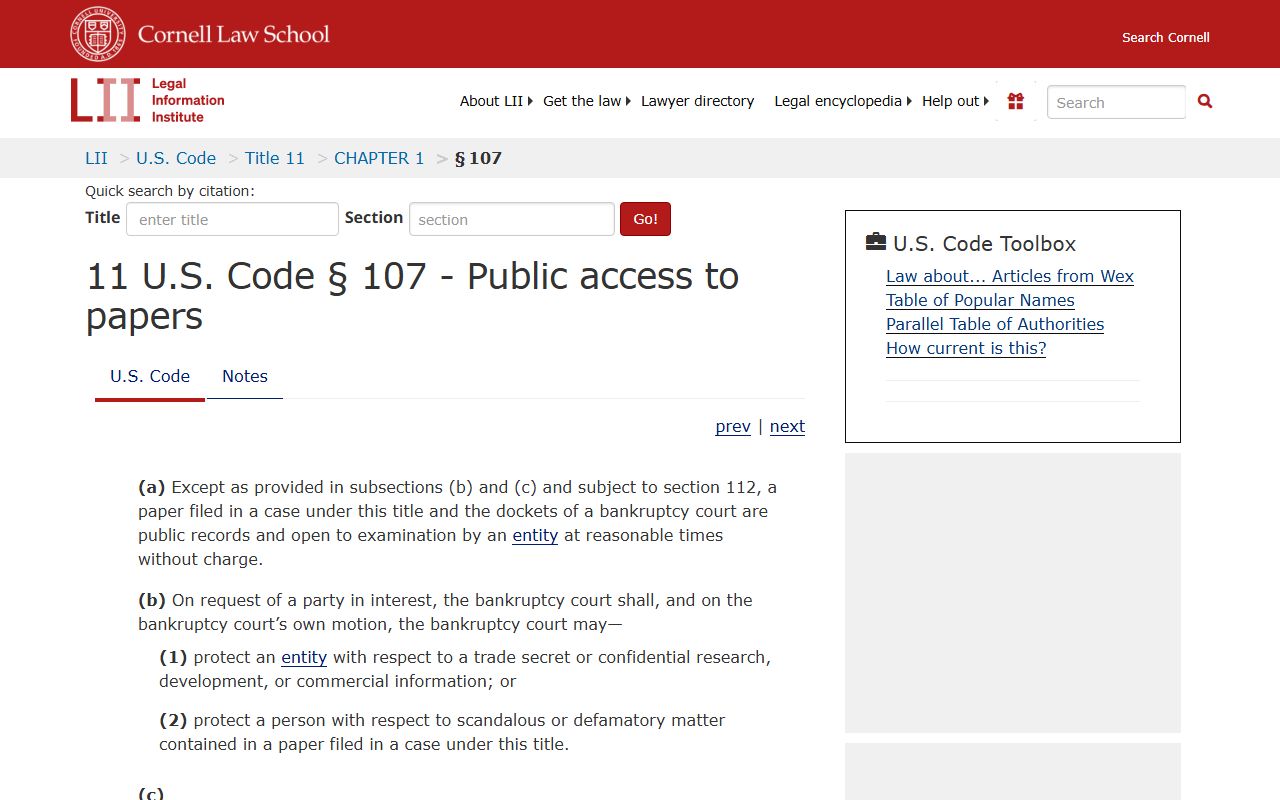
There are limited exceptions. The court can protect a person from scandalous or defamatory content in a filed document. It can also restrict access to personal details if public disclosure would create a real risk of harm or if privacy concerns outweigh the public interest. Bankruptcy records become public as soon as they are filed in North Carolina, regardless of whether the case is later approved or dismissed. A debtor can ask the court to seal records, but they must show a compelling reason for it.
The NC Judicial Branch handles state court records separately. State courts in North Carolina do not process bankruptcy cases, but they may hold related records like liens or judgments that reference a bankruptcy filing.
Note: Social Security numbers and other personal identifiers are redacted from public bankruptcy documents under federal privacy rules.
Free Phone Access to Bankruptcy Cases
The Voice Case Information System, called VCIS, gives you free access to basic bankruptcy case data by phone. Call 866-222-8029 at any time. The line runs 24 hours a day, seven days a week. It covers all three North Carolina bankruptcy districts. You need a touch-tone phone to use the system.
VCIS can tell you the case number, filing date, chapter type, trustee name, attorney name, discharge date, and case status. To search, have the debtor's name, Social Security number, or case number ready. The system walks you through menu options to find what you need. VCIS works well for quick checks on North Carolina bankruptcy cases, but it does not let you view or download documents. For full records, you need PACER or a visit to the courthouse.
Fees for North Carolina Bankruptcy Records
PACER charges $0.10 per page for viewing documents online. The cost for any single document is capped at $3.00, which equals 30 pages. This cap does not apply to name searches or reports that cover more than one case. Judicial opinions are free to view on PACER. The Electronic Public Access Fee Schedule lists all current rates.
At the courthouse, you pay nothing to use public terminals in North Carolina. Printing from those terminals costs $0.10 per page. If you ask the PACER Service Center to search on your behalf, the fee is $30 per name searched plus $0.50 per page for paper copies. Audio files from court hearings cost $2.40 each through PACER.
Fee waivers and exemptions exist for certain groups. Courts can waive fees for people who cannot afford them, bankruptcy case trustees, pro bono attorneys, nonprofit organizations, and researchers tied to schools. Parties in a case and their attorneys of record get one free electronic copy of all documents filed in their North Carolina bankruptcy case.
Bankruptcy Court Clerk Records
Federal Rule of Bankruptcy Procedure 5003 sets out what the clerk must keep on file. The clerk maintains a docket for each case and records every judgment, order, and action taken. Each entry shows the date it was made. The clerk also keeps a claims register that lists all claims filed when a distribution to unsecured creditors is expected.
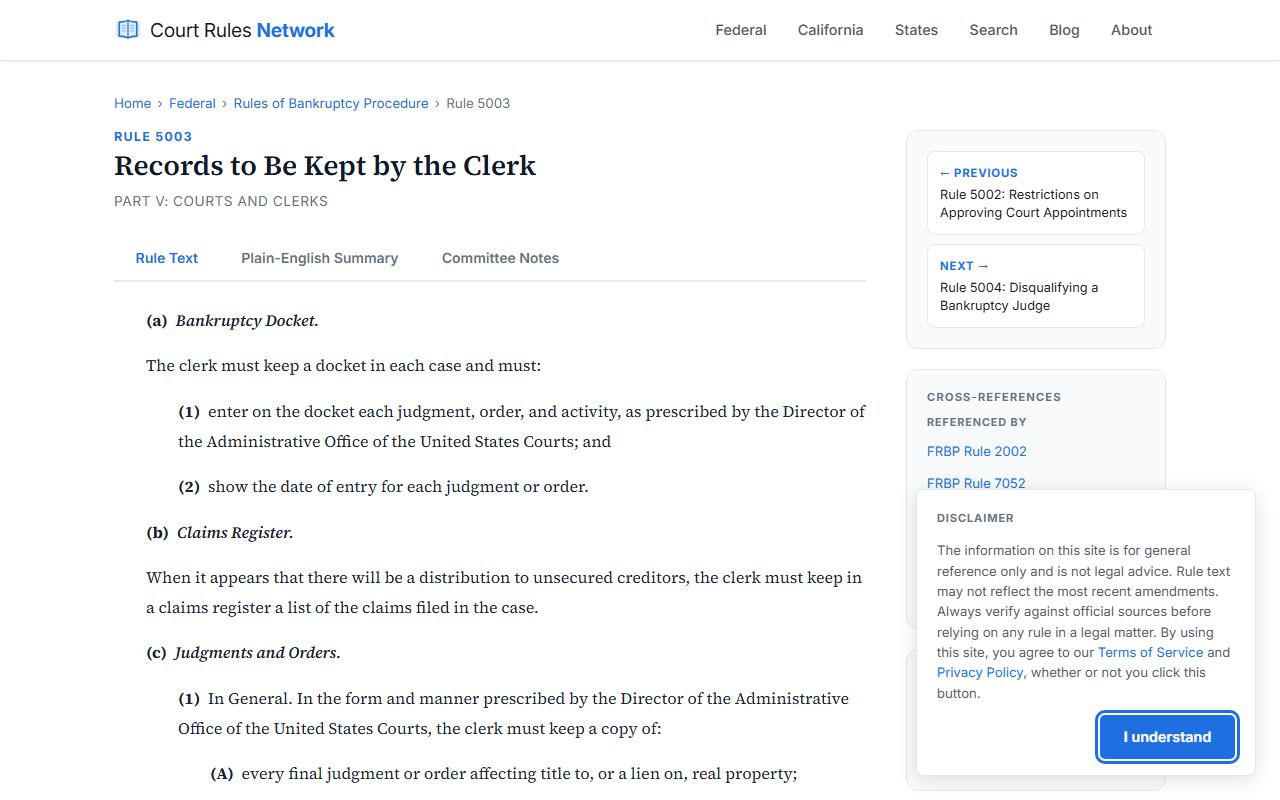
You can ask any clerk in North Carolina to search the index and confirm whether a case has been filed or a discharge entered. The clerk must certify the result of that search. This rule gives everyone a clear legal right to request and receive information about bankruptcy records held by the court. The UNC Libraries guide provides additional help with finding forms and contact details for all three North Carolina districts.
Historical Bankruptcy Records in North Carolina
Older bankruptcy records from North Carolina may no longer be at the courthouse. Cases closed for an extended period, especially those before December 2003, are often transferred to the National Archives and Records Administration. The NARA facility that handles North Carolina records is the National Archives at Atlanta, which serves the entire Southeast region.
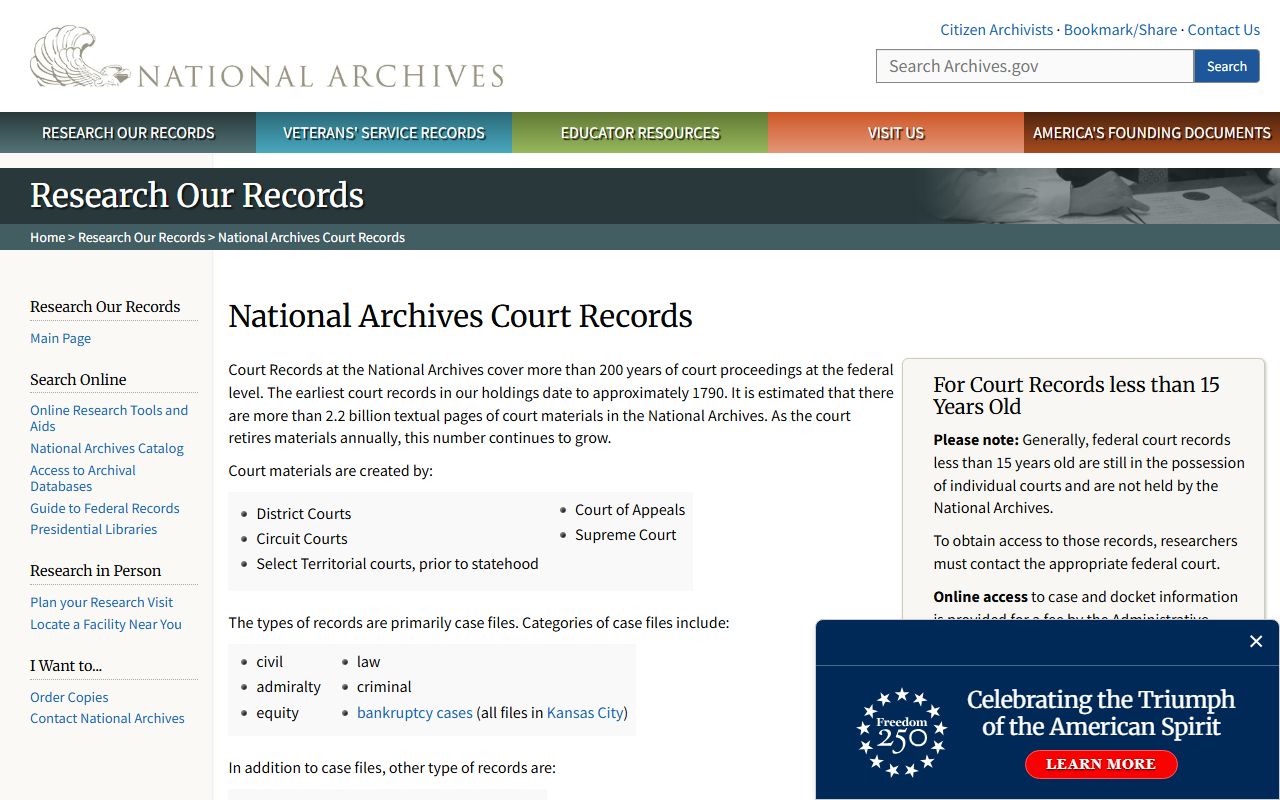
You can search for transferred records through NARA's online catalog or by calling the Atlanta facility. The bankruptcy court clerk in North Carolina can provide the transfer number, location number, and box numbers for records that have been sent to NARA. You may need to visit the research room in person or submit a written request to get copies. Always check with the clerk first to find out if the records are still at the court or have been moved to the archives.
For cases filed before December 1, 2003, in the Eastern District, attorneys who handled the case are required to keep documents with original signatures for four years after case closing under Local Bankruptcy Rule 5005-4(7). Contacting the original attorney may be another way to get copies of older North Carolina bankruptcy records.
Note: Always confirm with the court clerk whether records are still on site before making a trip to the courthouse or filing a request with NARA.
Browse North Carolina Bankruptcy Records by County
Each county in North Carolina falls under one of the three federal bankruptcy districts. Pick a county below to find local court details and resources for bankruptcy records in that area.
Bankruptcy Records in Major North Carolina Cities
Residents of major cities file bankruptcy cases at the federal court that covers their county. Pick a city below to learn about bankruptcy records in that area of North Carolina.